



Executive Summary
This document synthesizes survey findings from dozens of sexual violence prevention professionals in higher education, including Title IX coordinators, educators, and victim advocates. A link to a survey was shared by Catharsis Productions to thousands of contacts at colleges, universities, and prevention and advocacy non-profits throughout the United States. The invitation to complete the survey is in connection with the celebration of Catharsis Productions 25th Anniversary, and a multi-month exploration of how sexual violence prevention has evolved in the 21st century. Surveys were completed voluntarily and anonymously by some of these professionals between October 10, 2025, and November 5, 2025.
The analysis reveals a field that has made significant, tangible progress over the last 25 years, moving from a topic of silence to one with established institutional infrastructure, dedicated professionals, and mandatory training. Over half of professionals who completed the survey rate the overall progress in the field as “Very Good” or “Outstanding.” This evolution has been driven by federal legislation, student activism, survivor-led movements, and the professionalization of prevention roles. Substantial knowledge gain has been tracked around a greater comprehension around elements of consent, bystander intervention, and victim blaming. This has contributed to positive attitudinal shifts in how students understand sexual assault and the growth of a passionate group of student advocates and peer educators.
Despite this progress, significant and persistent challenges threaten to stall momentum. The most critical obstacles are a systemic lack of funding, inadequate staffing, and insufficient institutional support, leading to professional burnout and programmatic limitations. Professionals also struggle with some student apathy and the difficulty of translating awareness into behavioral change, particularly in a culture influenced by alcohol use, toxic masculinity, and inconsistent social norms.
The most effective prevention strategies identified are peer-led education and sustained, ongoing awareness campaigns. Looking ahead, the most urgent emerging trend to be addressed is a focus on digital and online sexual misconduct. This is followed by a need to expand prevention efforts in relation to racial and cultural diversity, prevention efforts in relation to LGBTQIA+ communities, and prevention for faculty and staff.
The consensus among respondents is that long-term success requires embedding prevention work into the core of the institutional culture through sustained funding, cross-campus collaboration, top-down leadership support, and a commitment to starting comprehensive education before students arrive on campus.
Most professionals still hold tight to hope for the future of prevention citing the passion and equity-focused mindset of the next generation of professionals, yet some respondents express concern about the current political climate and its impact on funding and policy. The path forward is clear, but it requires the institutional and political will to fully resource and prioritize this critical work.
——————————————————————————–
The State of Progress in Sexual Violence Prevention
Surveyed professionals express a strong belief that prevention efforts have progressed significantly over the course of their careers. This progress is reflected in both their general assessment of the field and the specific changes they have witnessed at their own institutions.
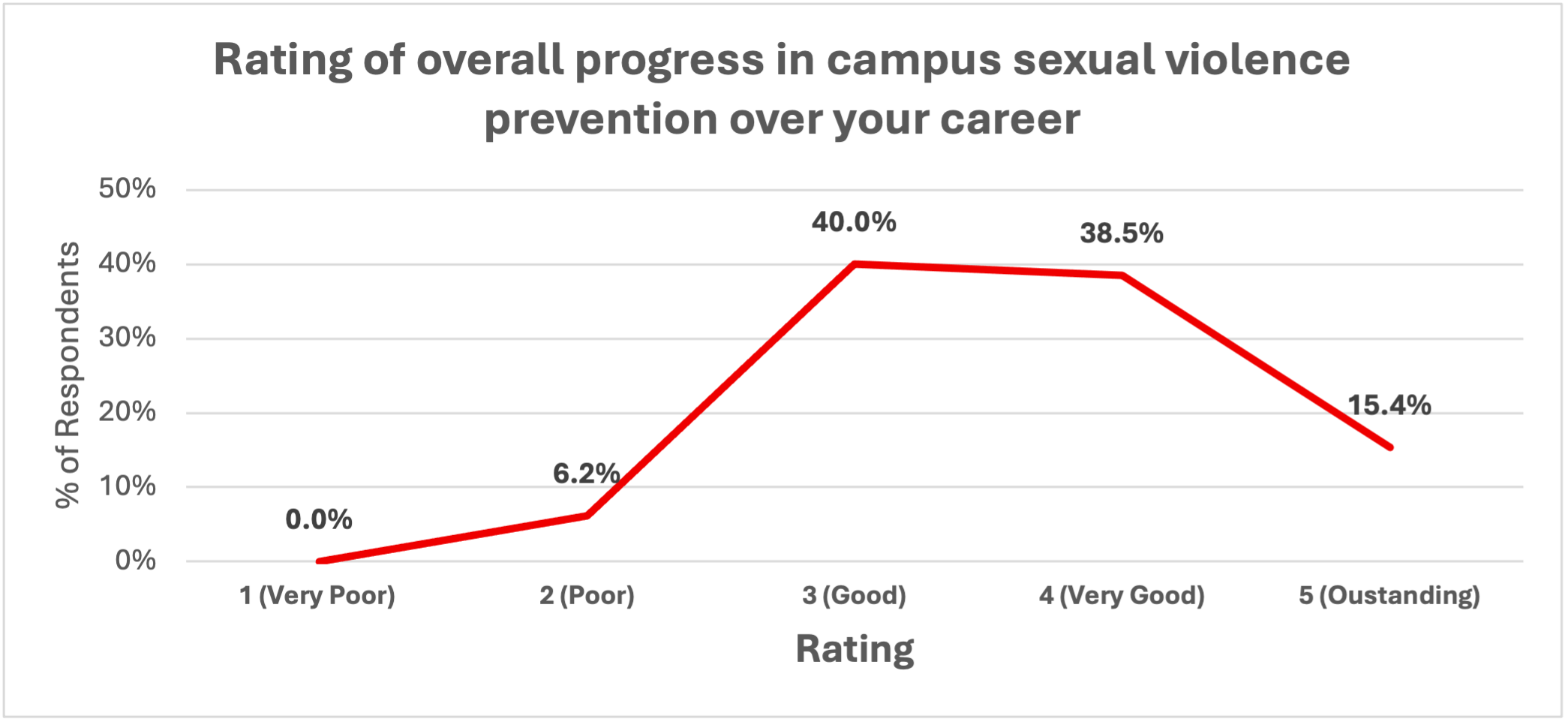
Notably, almost 54% of respondents rate the overall progress as a 4 or a 5 (“Very Good” or “Outstanding”) in overall progress in campus sexual violence prevention over the course of their careers.
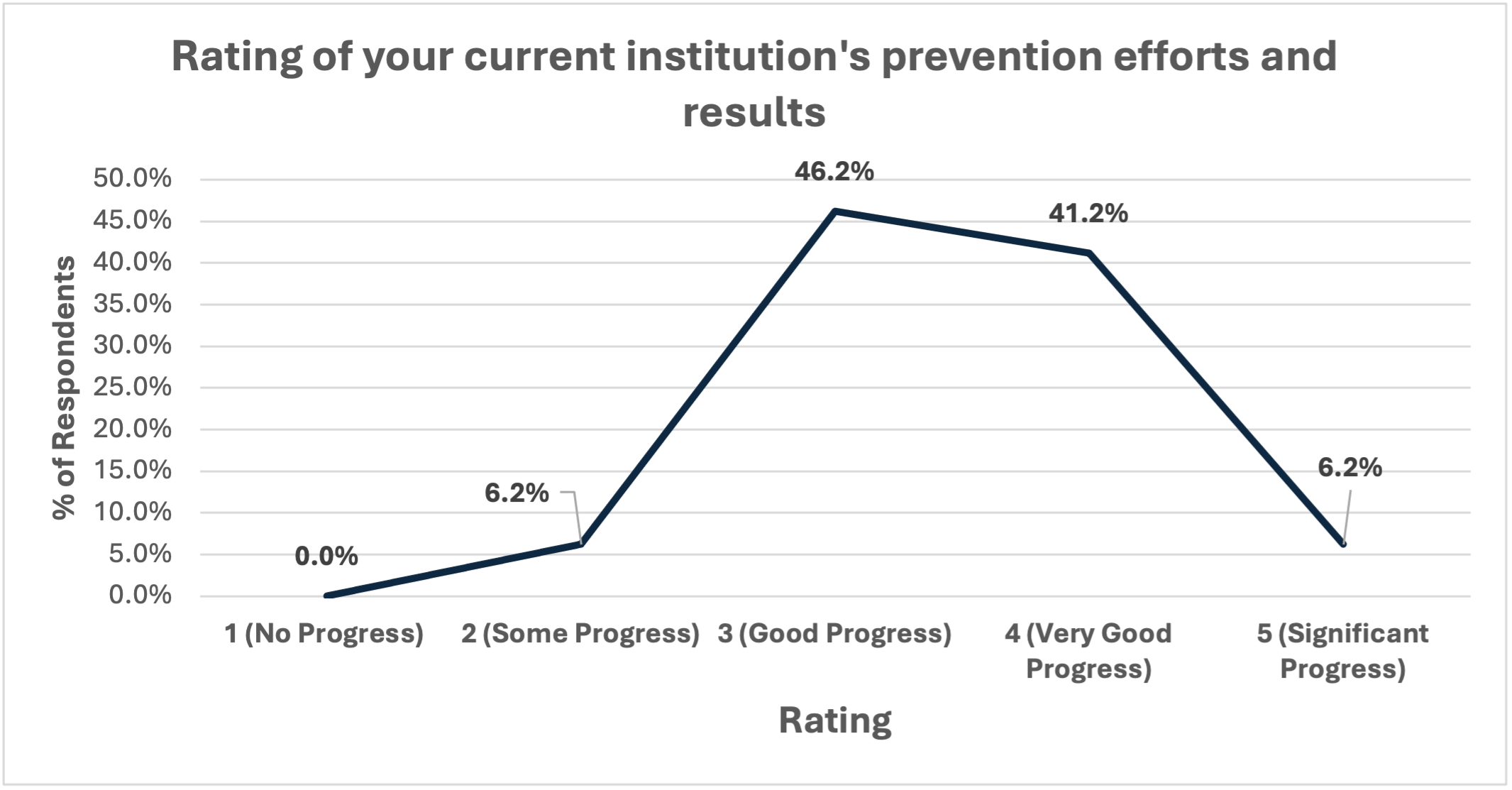
48.4% of professionals graded their current institution’s efforts as a 4 or 5 (“Very Good Progress” or “Significant Progress”) in prevention efforts and results. Only 6.2% reported only “Some Progress” and 0% reported “No Progress.”
Perceptions of Progress
Respondents were asked to rate knowledge gain in each of the following areas of interest over the last twenty-five years from “Strongly Disgree” to “Strongly Agree” : definition of consent, bystander intervention, rape myths, victim blaming, perpetrator/survivor identity, prevention tailored for LGBTQIA+ population, recognition of the role of racial stereotypes disproportionately impacting people of color, the use of alcohol in sexual assault, the role of verbal consent, and the continuum of harm.
At a time when it can be challenging to see the forest through the trees, this data demonstrates a strong belief that prevention efforts are progressing well.
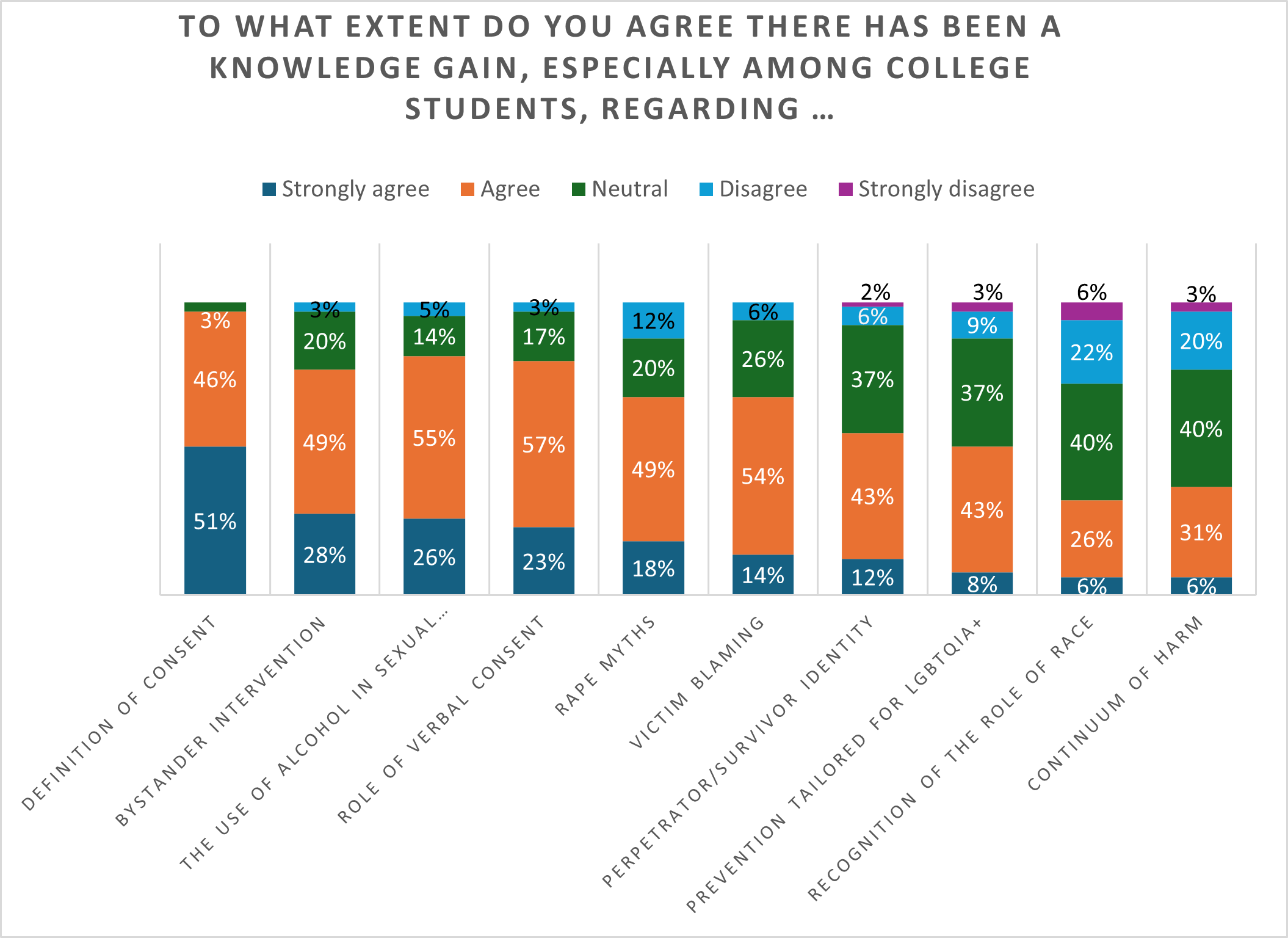
Quantitative data also suggests a generally positive outlook on the evolution of the field. A significant majority of professionals believe the work is moving in the right direction. A majority “Strongly Agree” or “Agree” regarding knowledge gain among college students in almost all areas of prevention polled.
Ninety-seven percent of professionals believe that college students today understand the definition of consent much better than they had in the past. 0% strongly disagreed or disagreed, and only 3% were neutral in their rating. A majority of professionals also strongly agreed or agreed to knowledge gain in most other areas of focus. The recognition of the role of racial stereotypes disproportionately impacting people of color yielded the least agreement in positive knowledge gain.
NOTE: Moving forward throughout this report, any text that is italicized is quantitative feedback shared by survey respondents and copied and pasted into this assessment.
Professionals were asked to summarize the most significant transformation in sexual violence prevention during their careers. In response, professionals consistently cited a better understanding of consent by college students in their long-form answers:
- “We’ve moved from ‘no means no’ to enthusiastic consent.”
- “The knowledge base of students coming in and their understanding of consent is far beyond what it used to be.”
- “The numbers of students entering college who understand the basics of consent have significantly risen, and that these numbers are even higher after college.”
- “The idea that consent can be a conversation.”
In addition, the majority of participants agreed or strongly agreed that there has been knowledge gain in bystander intervention, the use of alcohol in sexual assault, rape myths, perpetrator/ survivor identity, and prevention tailored for the LGBTQIA+ population. Less than a majority agreed or strongly agreed that there has been knowledge gain in the recognition of the role of race, and the continuum of harm.
Key Drivers of Positive Change
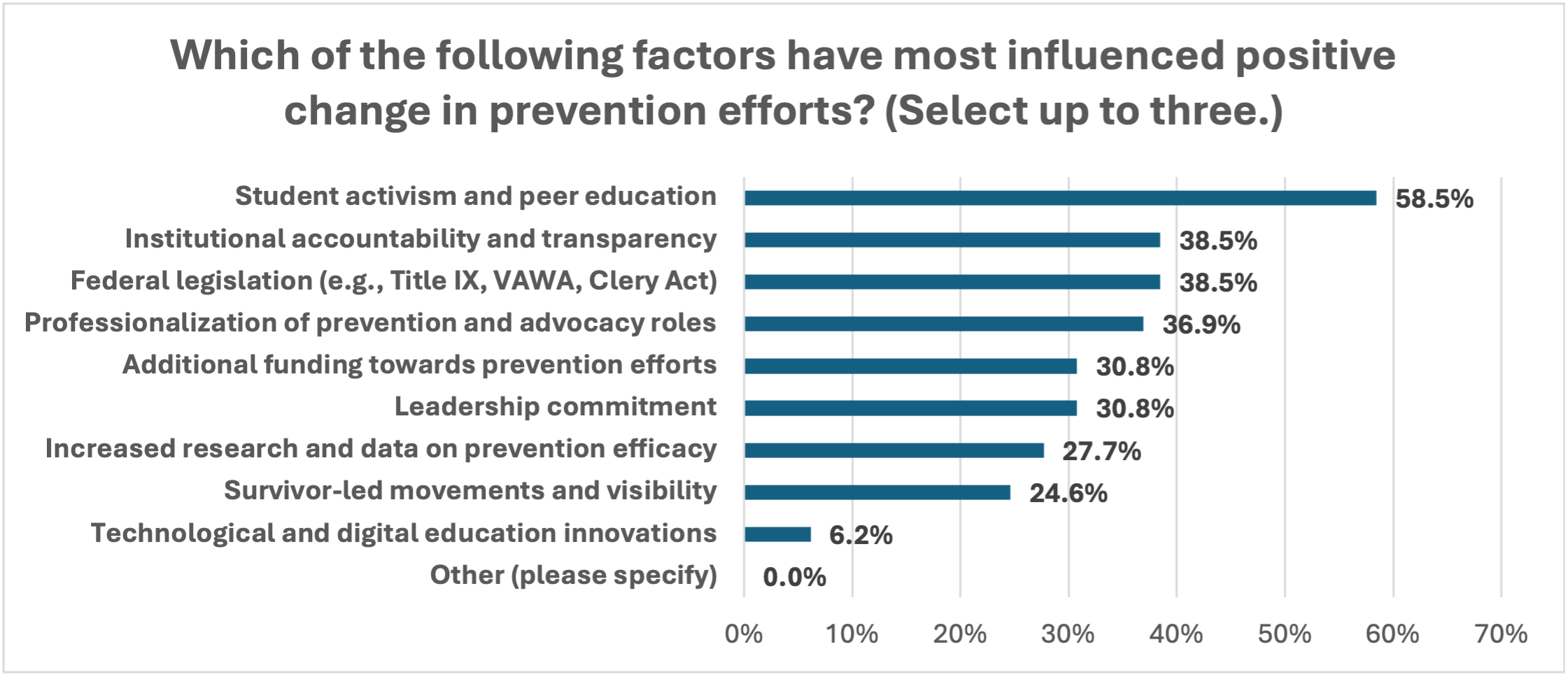
Respondents identified several key factors that have influenced positive transformation in the field. Student-led initiatives and federal legislation are seen as the most powerful drivers of change.
Notable Transformations Over Time
Qualitative feedback highlights a profound shift in the nature of prevention work, moving from basic awareness to systemic accountability and skill-building. Key transformations include:
- From Awareness to Accountability: A fundamental shift from merely raising awareness to fostering institutional accountability and implementing trauma-informed policies. One professional summarized this change as such: “Early efforts often centered on raising awareness about consent and risk reduction. While important, these approaches sometimes placed the burden on survivors or potential victims… Now, there’s a stronger emphasis on institutional accountability, trauma-informed policies, and bystander intervention, empowering communities to take collective responsibility for prevention.”
- Professionalization of Roles: The creation of full-time, dedicated positions for Title IX coordination and prevention education has been a major development. This contrasts sharply with the past, when prevention was often an unfunded, ancillary duty. As one respondent noted, “Prior to the past maybe 3-5 years, I feel like a lot of work on college campuses, especially medium to smaller sized institutions, typically fell to Title IX offices or off-campus organizations who would come in to provide required education. This meant ongoing prevention education wasn’t typically occurring. With the rise of full-time permanent positions within institutions, it has become possible to do more around education.”
- Increased Reporting and Survivor Visibility: Survivors are now more willing to come forward, and reporting options have expanded. This is attributed to the 2011 Dear Colleague letter and movements like #MeToo, which “made the topic of sexual harassment and abuse more legible.” Another suggests, “Survivors are more willing to talk about their experiences.”
- Enhanced Student Knowledge: Students are increasingly arriving on campus with a more sophisticated understanding of consent, a significant change from previous decades, even if it is not accompanied by a matching level of activism. One respondent observed, “[Since] providing some degree of mandatory sexual harassment training remains both legally required and a norm, the culture does feel much different than in universities pre-2011. Students generally have more basic buy-in on sexual assault prevention but may not be as actively engaged or view it as a priority.”
- Focus on Positive Skill-Building: There is a growing emphasis on teaching positive skills for healthy relationships rather than focusing solely on risk reduction and perpetrator behavior. “The move to focus on positive skills to create healthy relationships, instead of just focusing on stopping perpetration.” This is even as “students coming into campus for the first time do not know the basics of healthy relationships and navigating first loves.”
- Impact of Federal Legislation: The 2011 Dear Colleague Letter is repeatedly cited as a pivotal moment that “allowed prevention efforts to become more of an institutional priority.” However, subsequent changes, such as the 2020 Title IX Final Rule, are often viewed as setbacks that limited trauma-informed responses. The current political climate, especially in regard to access to federal funding, has in one professional’s opinion led to two challenges: “The first is the self-censoring for fear of retribution from the federal government. The second, and perhaps more pressing, is a walking back on mandatory prevention programming and a removal of prevention education from things like freshman orientation for fear of upsetting people and creating barriers to enrollment.”
- COVID-19’s Dual Impact: The pandemic presented both challenges and opportunities. It forced professionals to develop skills in virtual programming which could provide greater accessibility to material. Nonetheless, it also contributed to a significant decrease in in-person participation. “Since the COVID crisis, we have seen a significant decrease in participation in prevention workshops on campus. Before COVID, an event like Take Back the Night would draw around fifty or more students on our relatively small campus. Now, students don’t even know what Take Back the Night is and our average workshop attendance is 5 people.”
Most Effective Prevention Approaches and Practices
Almost 80% of Professionals believe college students have received the greatest targeted prevention efforts. (Professionals could choose up to three population types of the six listed.)
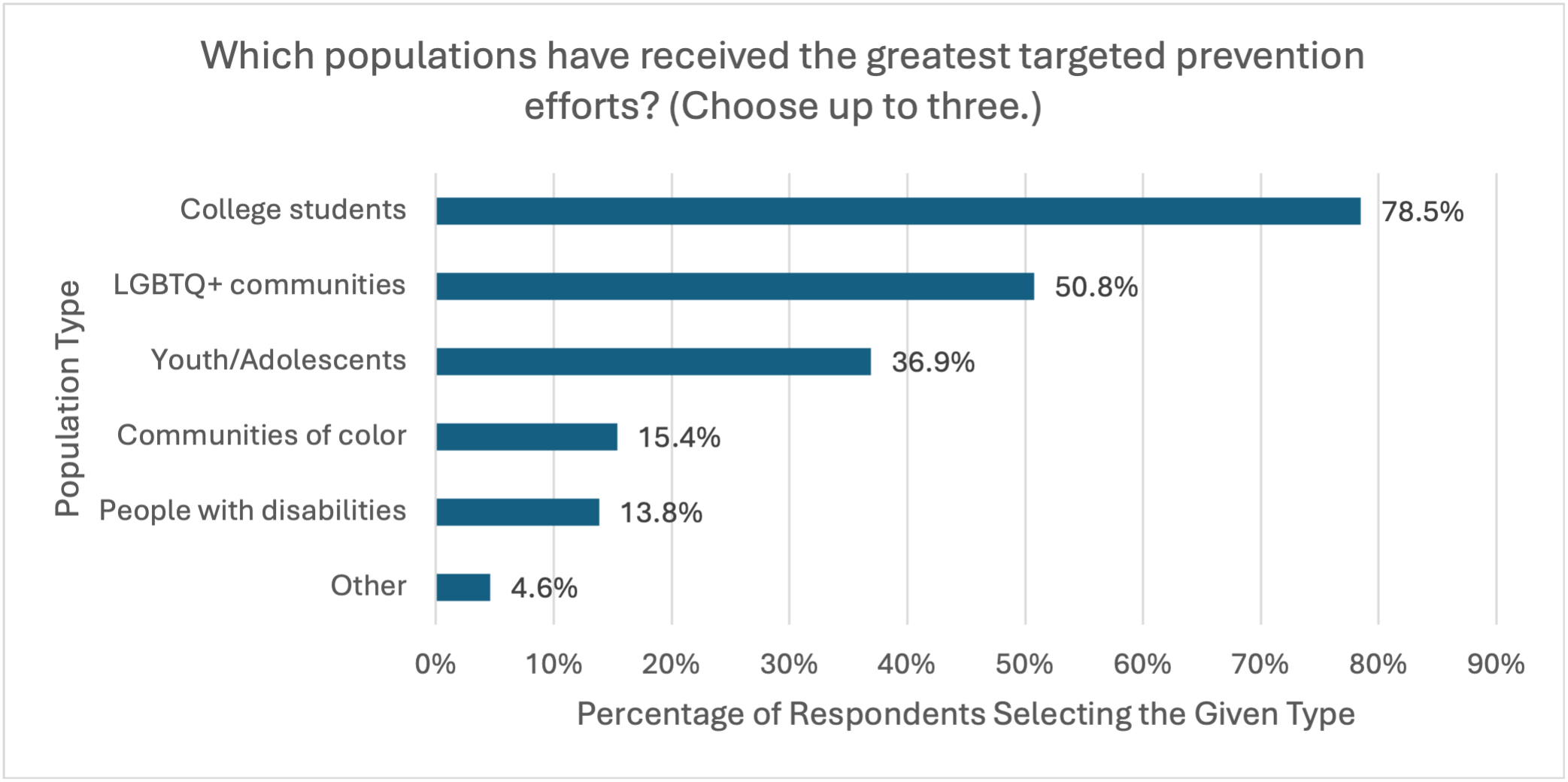
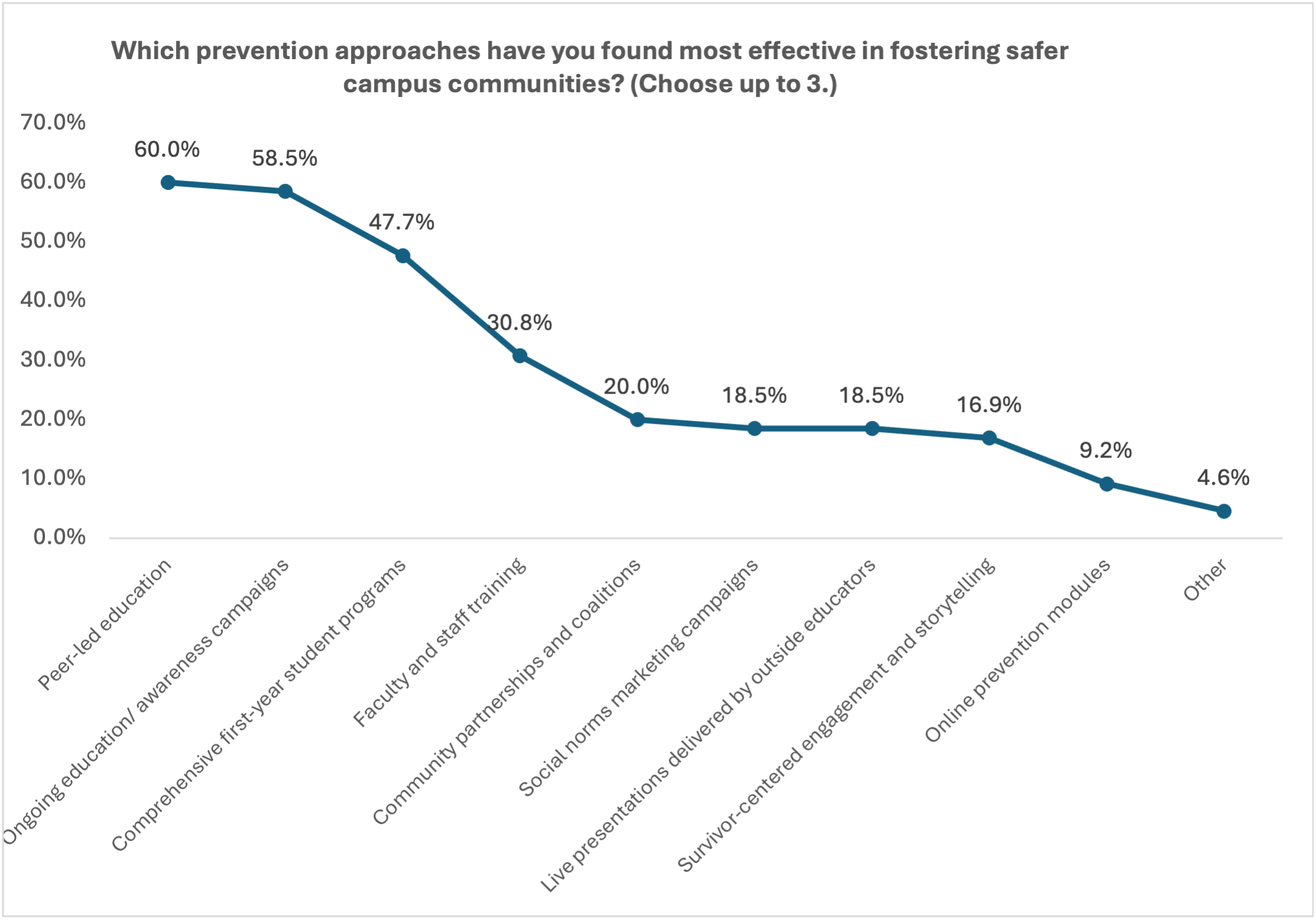
Professionals identified specific strategies and frameworks that have proven most effective in fostering safer campus communities. The data strongly favors interactive, sustained, and peer-driven models over passive or one-time interventions.
Top-Rated Prevention Strategies
When asked to select the most effective prevention approaches, respondents overwhelmingly chose peer-led education, ongoing awareness campaigns, and comprehensive first-year student programs, with almost 50% or more of respondents choosing those approaches (when they could choose up to three of the ten approaches listed, inclusive of “Other”).
Impactful Frameworks and Knowledge
Beyond specific programs, certain conceptual frameworks have been instrumental in improving effectiveness. Professionals were asked, “What specific knowledge, frameworks, or practices have most improved prevention effectiveness in your setting over your career?” Themes emerged around the following areas:
- Bystander Intervention: This was one of the most frequently mentioned practices, valued for providing students with concrete skills to act. One professional stated, “A focus on active bystander strategies seems to work well along with conversations about what consent looks like in real situations.”
- Theoretical Frameworks in Action: Integrating theory (e.g., The Socioecological Model, Stages of Change Theory, Parallel Process Model) into all aspects of prevention and response is seen as a crucial improvement. “Constant visibility, awareness, and education of sexual assault by several different approaches to stay relevant for everyone.” The 2020 book Sexual Citizens is cited by many as a landmark study that is informing their practices.
- Student-Centered and Survivor-Led Approaches: Centering the lived experiences of students and survivors is viewed as essential for creating relevant and impactful programming. One respondent noted that frameworks are most effective when “co-created with students and shaped by their lived experiences.”
- Integration with Academic Curricula: Incorporating prevention topics into academic courses is seen as a powerful strategy for normalizing the conversation and reaching a wider audience. “The most significant impact on sexual violence prevention came when [we] lobbied to move the content/curriculum from a Student Wellness topic into our KINS [Kinesiology] 1525 curriculum, which most students take during their first or second semesters on campus.”
- Making education and awareness relatable: “Reaching students where they are” through live presentations, peer-led workshops, and ongoing campaigns, including tabletop materials, was cited many times by professionals. A difference can be made “when the pedagogy is current, relevant, and engaging. When we lecture, students tune out.” One professional provides this take: “Shifting the focus to media literacy has helped to bring them into the conversation. It’s much easier to talk about your favorite television show than your own life.”
Persistent Challenges Hindering Progress
Professionals were asked, “Please describe any persistent challenges that remain in sexual violence prevention on campus.” Despite clear advancements, professionals identified a formidable set of persistent challenges that limit the efficacy and sustainability of their work. These challenges are overwhelmingly structural and cultural in nature.
Institutional and Resource Deficits
The most frequently and passionately cited challenge is the chronic lack of resources and institutional support.
- Funding and Staffing: Respondents repeatedly described their offices as under-resourced, under-staffed, and operating on low budgets. This deficit prevents ongoing education and limits their reach. As one professional stated, “Having small budgets and small staffs…does not allow for ongoing education throughout the year.” Another added, “These offices tend to work with an entire student body and yet historically have one person responsible for all of the prevention efforts.”
- Lack of Leadership Buy-In: Prevention is often not prioritized by senior administration, who may see it as a compliance issue rather than a core institutional value. “It is not a priority for our district leadership” serves as an example of open-ended responses from several practitioners citing a lack of institutional support from leadership. This lack of support undermines efforts and communicates that the work is not a priority.
- Burnout: Prevention efforts, especially when in high demand but under-resourced, take a toll on the individuals spearheading this work. “While I think we have done a good job recognizing the need for self-care and burnout in victim services professionals, I think we still have a ways to go with the same acknowledgement for violence prevention professionals. We often feel a tremendous burden of responsibility for the effectiveness of our educational efforts and the impact. It can also be very demoralizing to continue the same messaging on repeat over the decades because that message still needs to be said.”
Student Disengagement and Apathy
Engaging students in a meaningful way remains a primary hurdle.
- Apathy and “Prevention Fatigue”: Many students are described as apathetic, tuning out messages they feel they have “heard it already.”
- Reaching Unengaged Populations: It is particularly difficult to involve certain student groups, such as cis-gender white men, athletes, and online students, in voluntary programming.
- Reluctance to Engage: Students often avoid difficult conversations about consent and boundaries. “Many students are conflating direct communication with conflict and as a result, avoid it at all costs—even the necessary conversations regarding consent and personal boundaries. We need to normalize direct, effective communication, and empower students to have those hard conversations.”
Cultural and Social Norms
Deeper cultural issues on and off campus continue to fuel sexual violence. “As with many educational prevention efforts, you are ‘preaching to the choir.’ Many of the folks that need to hear it and be part of the solution, continue to be part of the problem.”
- Alcohol and Drug Use: The overuse and abuse of alcohol is cited as a significant factor in sexual misconduct incidents. “Alcohol usage and the informal hook-up culture have hindered the true understanding of consent and respect for others.”
- Toxic Masculinity and Rape Culture: Respondents identified “toxic masculinity,” “misogyny,” and a persistent “rape culture” as powerful opposing forces. One noted the challenge of the “manosphere” and other popular culture influences.
- Underreporting and Lack of Trust: Despite progress, fear of reporting and a lack of trust in institutional processes persist. “Students believe that nothing will be done because things have to happen behind closed doors first.”
Regulatory and Political Instability
The external environment creates significant uncertainty and additional barriers.
- Changing Regulations: The frequent changes to Title IX regulations create instability and require extensive work to implement, diverting resources from prevention programming. One practitioner cited that the most significant transformation in sexual violence prevention was the “return of the Title IX 2020 Final Rule and dismantling of robust, flexible response to sexual harassment on campus. Under these 2020 regulations, Complainants have limited access to trauma-informed sexual harassment/violence response on campus.”
- Political Climate: Multiple professionals believe that the current political climate is seen as hostile to prevention work, with federal funding cuts, policy rollbacks, and self-censorship for “fear of retribution.”
- “It’s a politically challenging time to fight the cultural forces that can encourage interpersonal violence.”
- “Right now, I do not feel hopeful for the area of sexual violence prevention. Funding is declining, the political landscape has interfered, and colleges are fearful to address anything.”
- “I just can’t imagine what is ahead, given the current political landscape.”
urgent priorities and future strategy
Based on the current landscape, professionals identified clear priorities for expanding prevention efforts and outlined the systemic changes needed to sustain this work long-term.
High-Urgency Prevention Areas
There is a strong consensus that prevention efforts must broaden beyond traditional undergraduate programming. We asked participants on a scale of “Not Urgent” to “Critically Urgent” what areas would be identified as most urgent for expanded prevention efforts. These areas include: digital and online sexual misconduct, prevention addressing racial and cultural diversity, prevention tailored for LGBTQIA+ communities, prevention for faculty and staff, community-based approaches beyond campus, stalking awareness, dating violence/domestic violence awareness, and prevention for graduate/professional students.
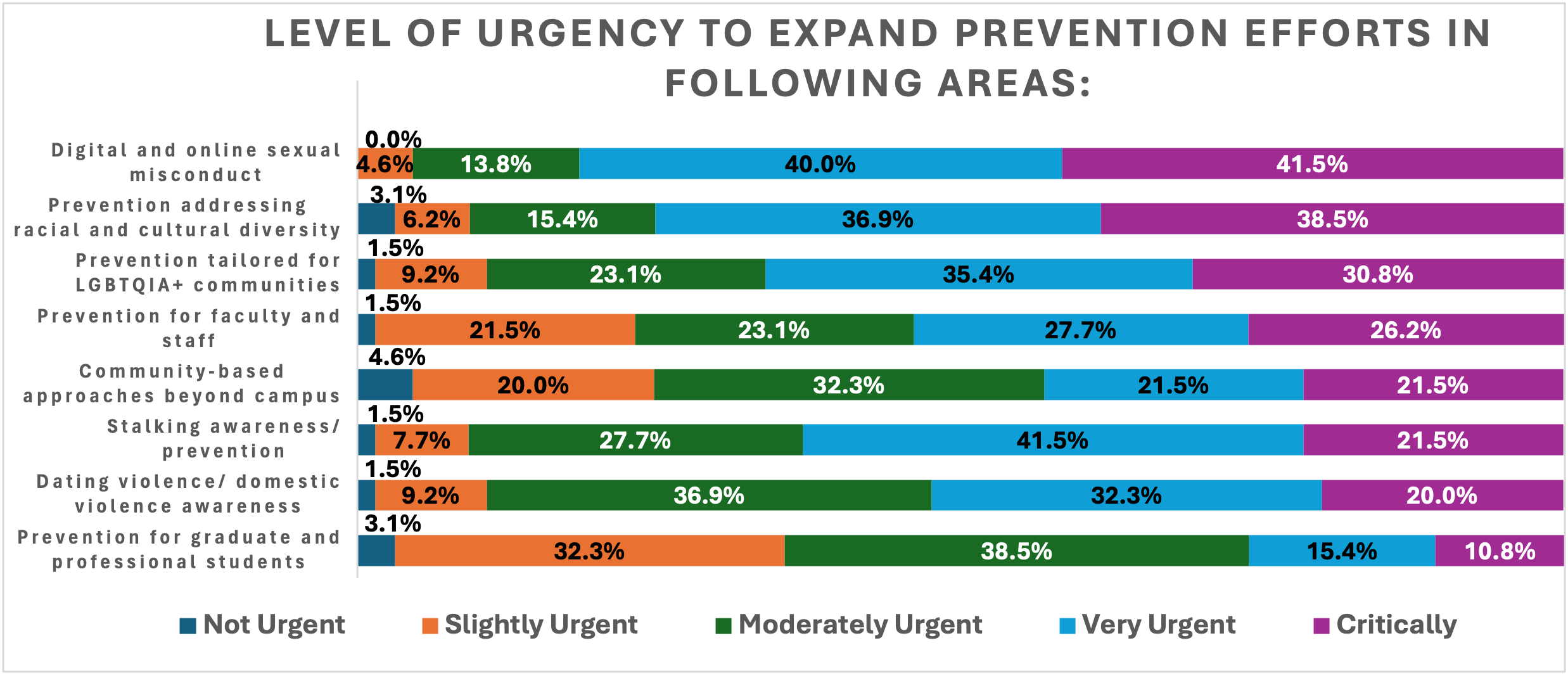
Almost 92% of participants rated it very urgent or critically urgent to expand prevention efforts in the area of digital and online sexual misconduct. This area of need has accelerated dramatically in the past few years as students communicate much more often digitally (through texting, social media, virtual group spaces, etc.) than in-person. Technology-facilitated sexual violence must be better understood and addressed. A majority of professionals considered the following areas as very urgent or critically urgent to apply prevention efforts: prevention addressing racial and cultural diversity, prevention tailored for LGBTQIA+ communities, prevention for faculty and staff, community-based stalking awareness, and dating violence/domestic violence awareness.
Systemic Changes for a Sustainable Future
To create lasting change, respondents advocated moving prevention from a peripheral program to a core institutional function. Participants were asked, “What strategies or systemic changes would most strengthen prevention education and advocacy in the next decade?” and “How can institutions better sustain prevention work long-term?” Below are some of the trends that emerge in their responses:
- Secure Permanent Funding and Staffing: This was the most universal recommendation. Institutions must build prevention into their core budgets, create more full-time positions, and offer competitive pay. As one person put it, “Fund prevention like we mean it.”
- Embed Prevention Across the Institution: Prevention cannot be the sole responsibility of one office. It must be integrated “into trauma-informed, intersectional prevention education across all facets of university life and find ways to leverage technology thoughtfully.” By working prevention into academic curricula, residence life, and athletics, it creates a culture of shared responsibility. “This work should not just exist in a student life/student affairs setting but be positioned within the institution at large. It should be staffed and budgeted to allow for growth and for embedding prevention efforts in as many places in campus life as possible.”
- Start Education Earlier: A strong consensus emerged that prevention must begin long before college. Respondents called for comprehensive, age-appropriate sex education and bystander intervention training in K-12 schools. One professional hopes for “Sex education (NOT ABSTINENCE ONLY) programming required at the K-12 level. Parents actually educating their children about healthy sexual behaviors.”
- Obtain Top-Down Leadership Support: Lasting change requires a clear, consistent, and vocal commitment from university presidents and senior leaders who champion prevention as a community priority.
- Use Data-Driven Approaches: Institutions should conduct regular campus climate surveys and use the data to inform and evaluate their prevention strategies transparently.
outlook for the future
The briefing concludes with a look at the future of the field, blending hope in a new generation of professionals with sober recognition of the immense challenges that remain. The final two open-ended questions were: “What gives you hope about the next generation of prevention professionals?” and “Is there anything else you wish to add regarding the state of sexual violence prevention today on college campuses (and how it has changed or not changed over the last twenty-five years)?” The following assessment comes from answers to either of these questions.
Hope for the Next Generation
Despite the difficulties, most professionals are optimistic about the future leaders in their field. An overwhelming number of professionals cited how so many students and young people are better informed on issues of sexual violence and driven to make a difference.
- Passionate and Dedicated: Both practitioners and student advocates are seen as deeply committed to the work and motivated to create positive change. “The fact that students and young professionals still want to make change and do this work gives me hope for the future and helps me to believe that the backwards steps that have occurred will be able to be made up going forward.”
- Knowledgeable about Equity and Inclusion: They bring a more nuanced understanding of how identity (race, gender, sexual orientation) intersects with experiences of violence. “I think young people are very knowledgeable about race, gender, sexual orientation, ability status, and other identities and how marginalization can impact experiences.”
- Collaborative and Open-Minded: They are more willing to have open conversations and often employ a collaborative, “bring them in” approach rather than a “call them out” one. “These conversations are not as taboo as they once were, people are more willing to talk honestly about these things now.”
- Tech-Savvy: Students’ comfort with technology and social media is seen as a key asset for reaching students.
“This generation of students is more open, vocal, and socially conscious than ever before. They are willing to hold institutions accountable and are committed to creating inclusive environments. Their willingness to discuss consent, equity, and advocacy openly gives me hope that prevention efforts will continue to evolve and expand.”
“I continue to see droves of students on our campus who are passionate about this issue and choose to spend their time working on culture change. They bring elevated, nuanced knowledge about these topics and an incredibly inclusive mindset. The expectation is that education will be inclusive, and this will only strengthen our work. In my experience, the students with whom we work also really understand the need to “meet people where they are” in their learning and “bring them in” to the conversation as opposed to “calling them out.” This collaborative approach is really hopeful.”
concluding assessment
The field of sexual violence prevention has undergone a remarkable transformation. Twenty-five years ago, the topic was largely ignored; today, there is a recognized infrastructure and a generation of students with a baseline understanding of consent.
“When I first began this work it was scary and shameful to speak about sexual violence. Now it is a compliance requirement for institutions to educate their students.”
However, this progress is fragile. Violence rates have not declined as hoped, professionals are burning out from a lack of resources, and the work has not adequately addressed the intersections of identity and technology. The path forward is not a mystery—it requires sustained funding, institutional commitment, and the will to address root causes like gender, power, and culture. The professionals on the front lines have demonstrated their commitment. The critical question that remains is how institutions will more consistently provide the resources to match it.
“Over the past twenty-five years, prevention has shifted from awareness campaigns to comprehensive, trauma-informed education and intervention strategies. While awareness has grown, culture change is ongoing, and more work is needed to dismantle deeply rooted norms that excuse or minimize sexual violence. The progress made gives reason for optimism, but long-term, sustained investment remains critical to achieving lasting change.”
NOTE: If you would like access to a document containing all survey responses, click here and complete a form to request it. The document will be sent to you shortly after we’ve received a completed form.

Catharsis Productions
Catharsis Productions' mission is to change the world by producing innovative, accessible and research-supported programming that challenges oppressive attitudes and shifts behavior.